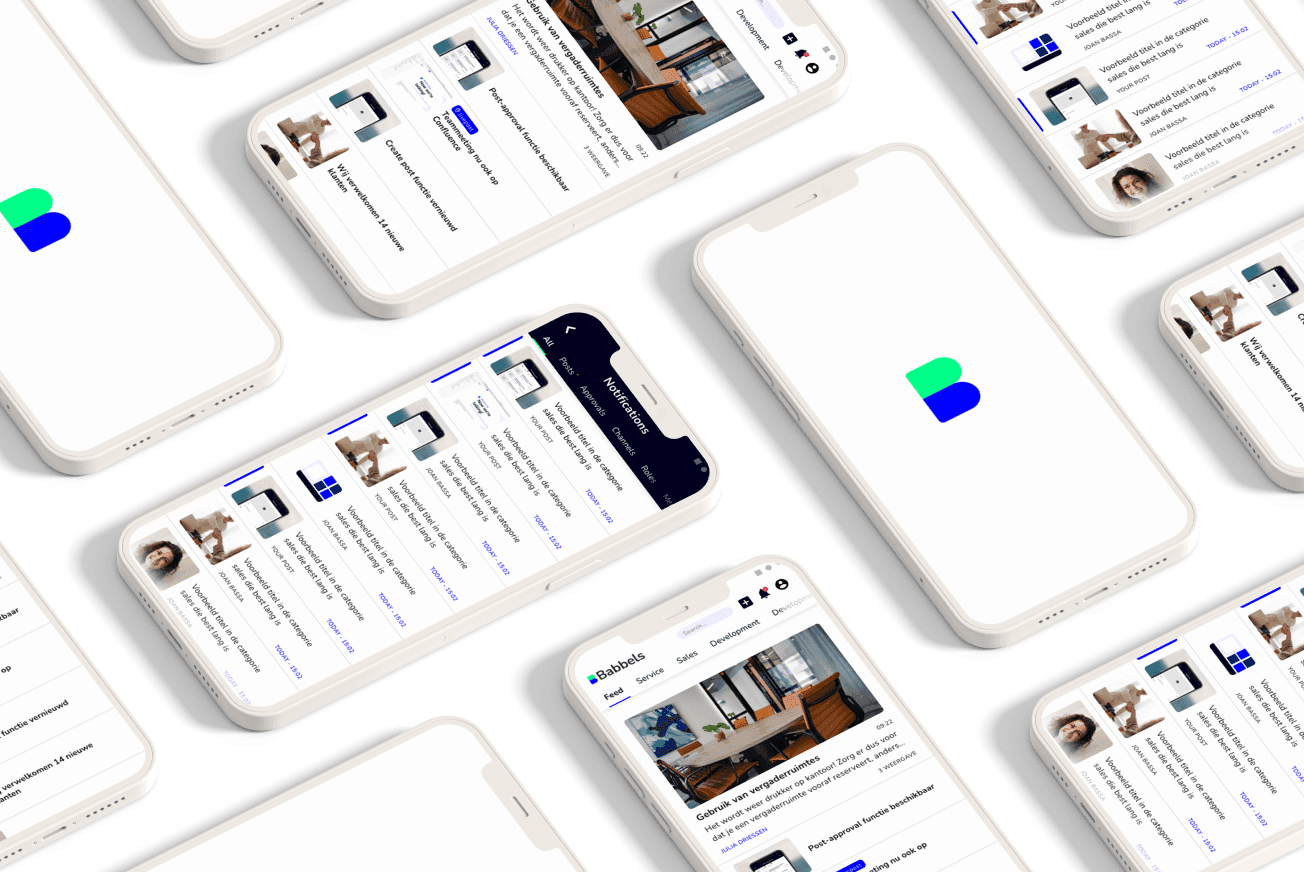
Babbels
UX & Product Strategy
Building a communication platform for non-desk organizations
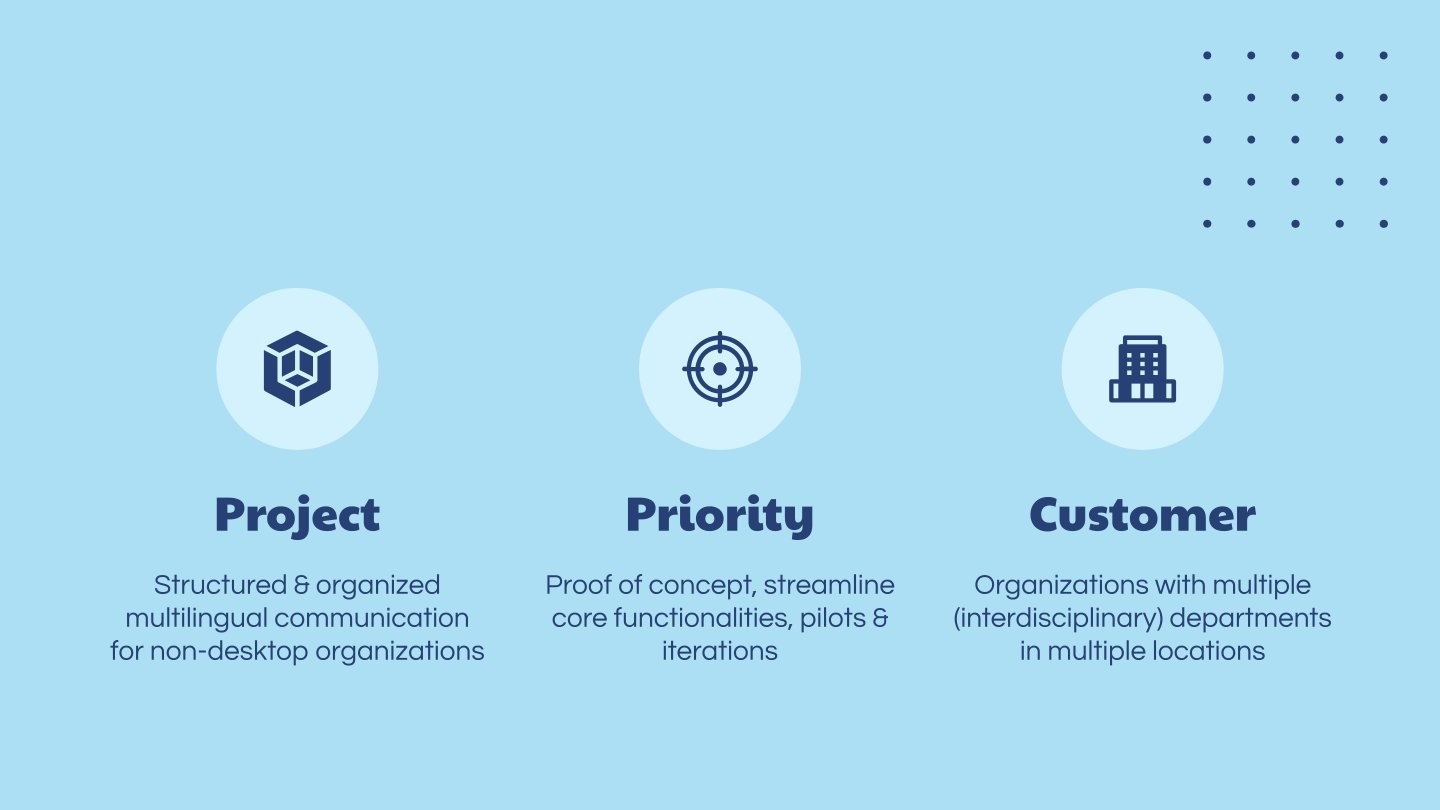
Babbels (founded by Exact Online founder) is a communication platform built for organizations with complex, non-desk-first structures. Teams operate across locations, departments, and roles, and need a reliable way to share information that reaches the right people, in the right language, at the right time.
I joined Babbels at an early stage, working directly with the director, and was responsible for defining the product’s design foundation. There was no existing design system, visual language, or established way of working. From the first concept through pilots and iteration, I shaped how the product looked, worked, and evolved.
The goal was not just to ship an MVP, but to create a flexible system that could scale from small organizations to companies with highly complex structures, without sacrificing clarity or ease of use.
Context
My role and responsibilities
I led product design end to end across web and mobile app.
This included defining the design strategy, creating the design system and visual language from scratch, and translating product goals into concrete user flows and interfaces. I worked closely with the director to determine product direction, roadmap priorities, and tradeoffs, and collaborated daily with engineering to move quickly from concept to implementation.
A large part of my role was understanding how different organizations structure communication. I conducted interviews with pilot companies to learn how information flows through locations, teams, and roles, and used those insights to shape core product decisions around hierarchy, permissions, and content creation.
I was also responsible for iterating the product during pilots, identifying friction in real usage, and simplifying complex workflows without limiting flexibility
Product scope
Babbels enables structured, multilingual communication across organizations with diverse roles and locations.
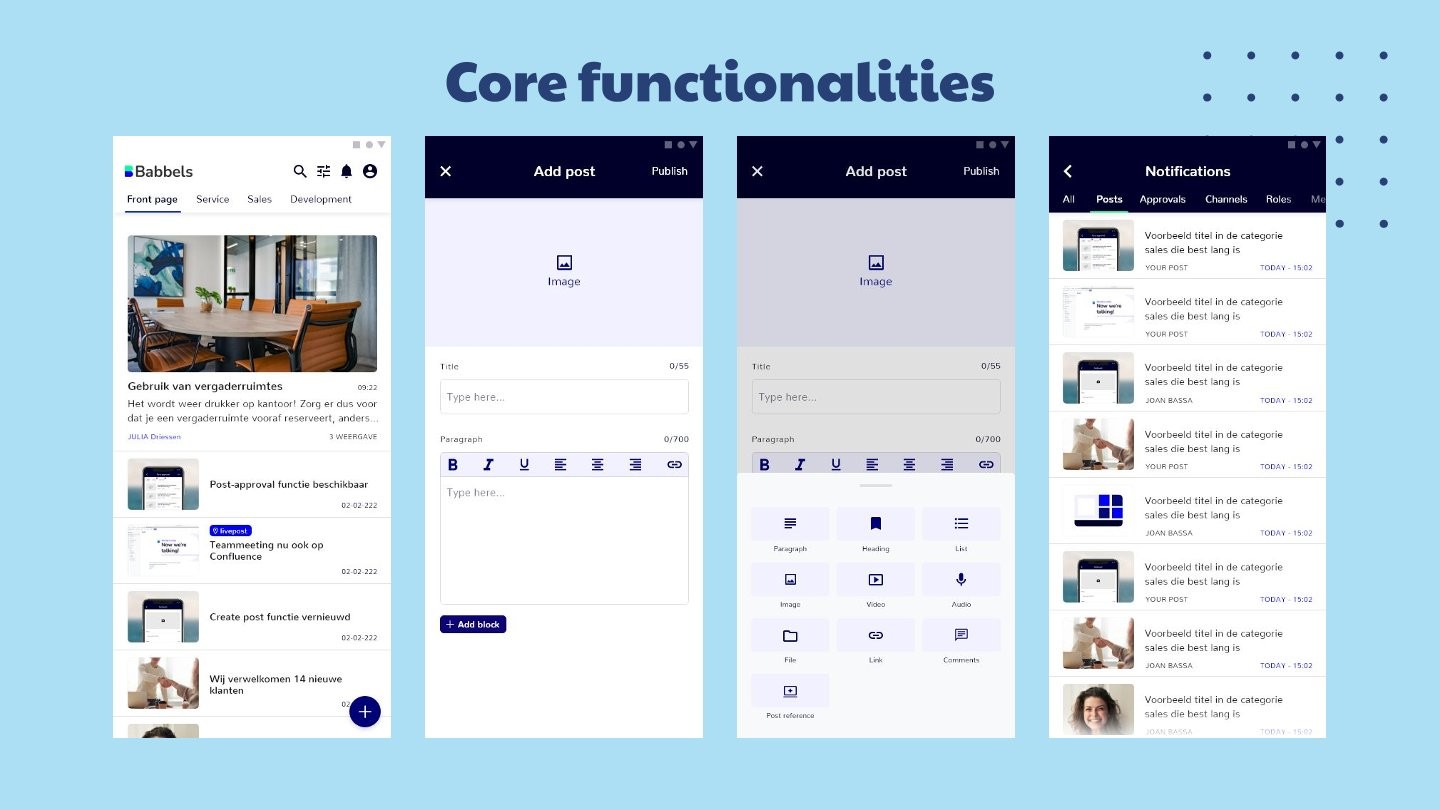
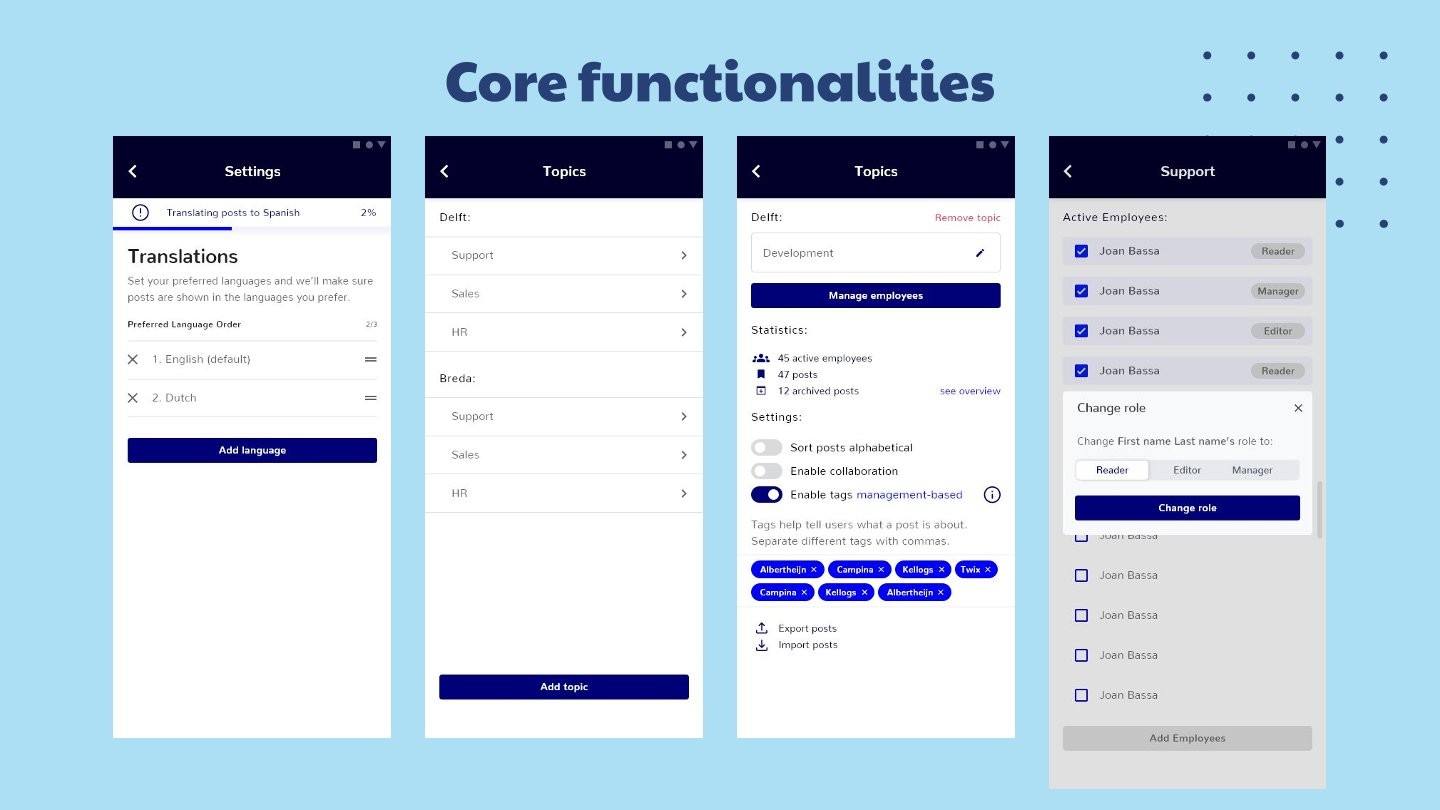
Users see a personalized home view based on their role, team, and location. Content is organized into topics and subtopics, with granular access control determining who can view or edit information. Posts can be classified using tags, allowing communication to be targeted without manual overhead.
The platform supports three roles: reader, editor, and manager. Managers can create groups and subgroups, assign roles, and manage access. Editors can create and manage content within their permissions. Readers receive information relevant to them, without needing to navigate unnecessary structure.
A built-in notification center ensures important updates are not missed, and all functionality is available across both mobile and desktop.
Feature highlights
Multilingual communication as a core feature
One of the defining aspects of Babbels is built-in automatic translation.
Users can write posts and messages in their own language. Content is automatically translated so every reader sees it in their native language. This was not treated as an add-on, but as a core part of the product experience, influencing how content creation, editing, and reading flows were designed.
This made it possible for organizations with multilingual teams to communicate without friction, while keeping the interface consistent and predictable for all users.
Content creation and post management
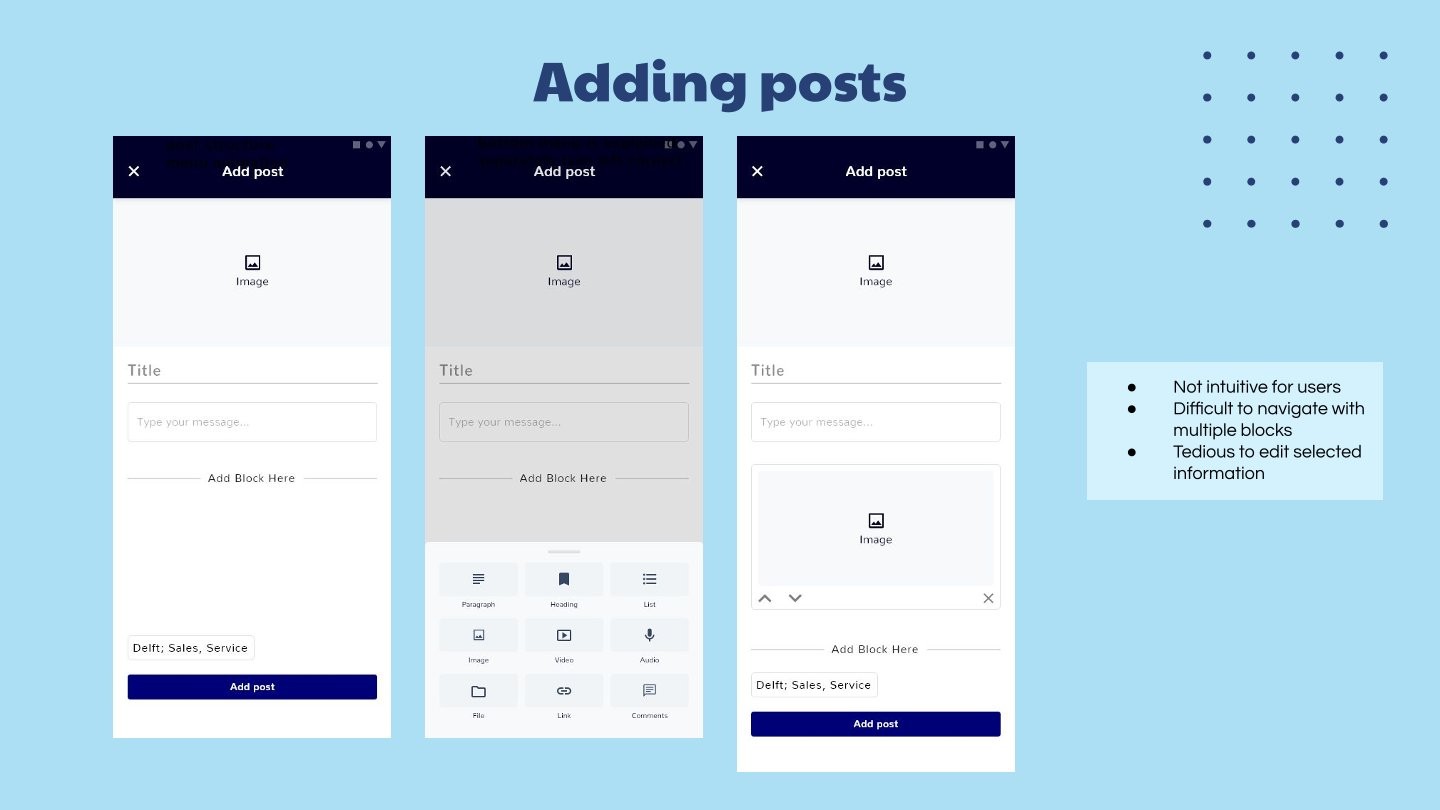
Creating posts was a critical workflow and an early source of friction.
The initial experience was flexible but difficult to navigate, especially when posts contained multiple types of information. Editing specific parts of a post was tedious, and classifying visibility required too many steps.
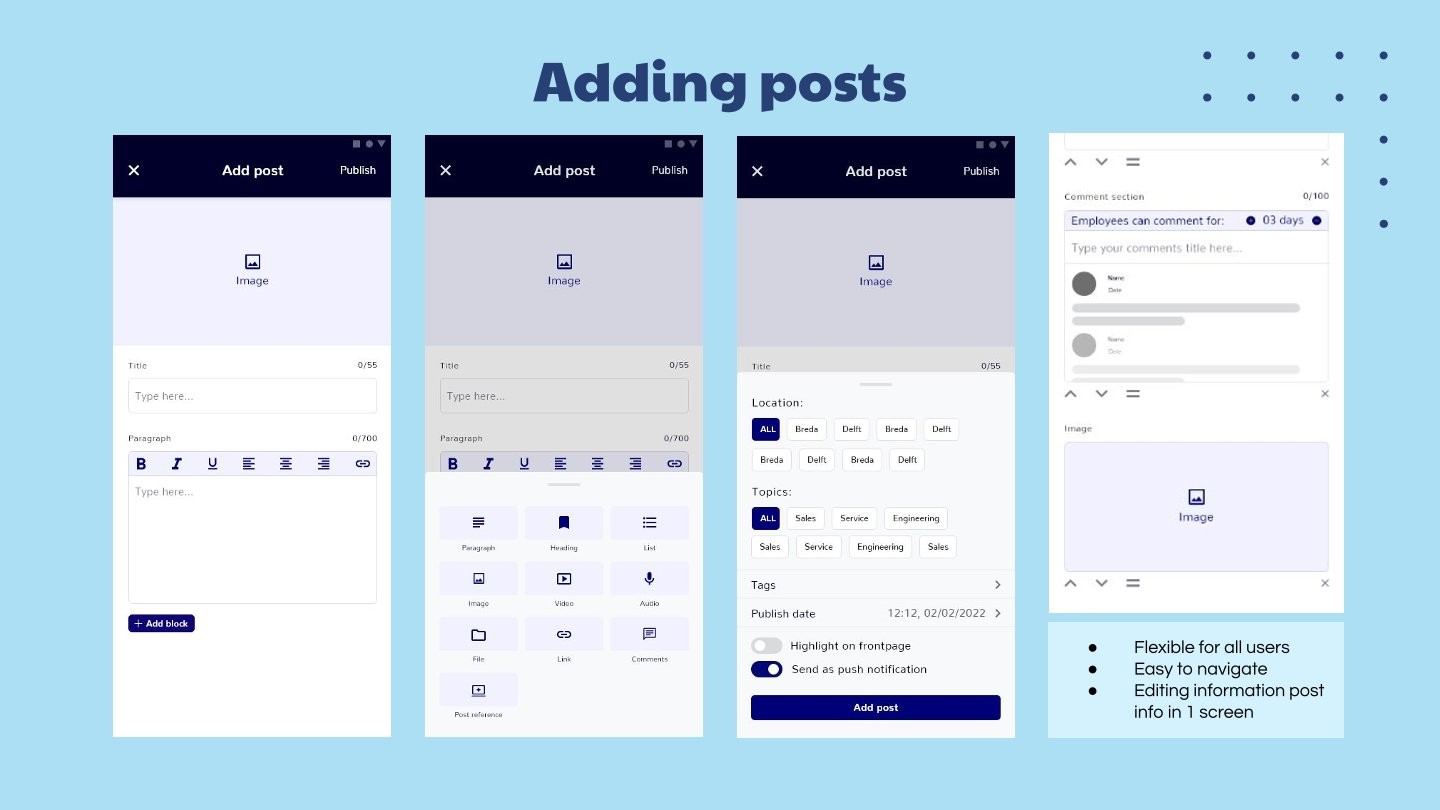
I redesigned the post creation flow around a structured, block-based editor, similar in concept to a WordPress builder but tailored to internal communication. Standardized building blocks made posts easier to compose, edit, and scan, while still supporting a wide range of use cases.
Visibility and classification were integrated directly into the creation flow, making it clear who would see what, without forcing users into separate settings screens.
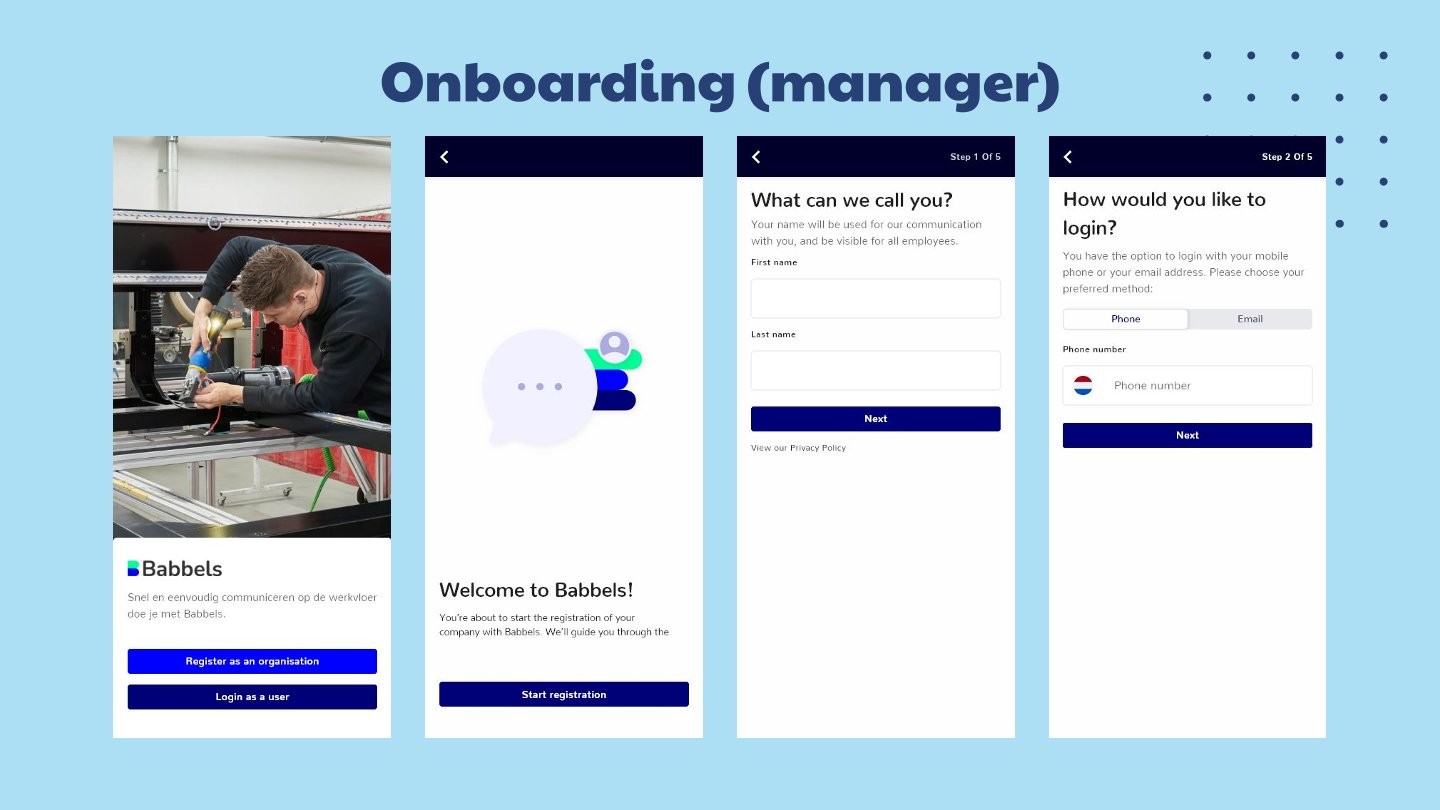
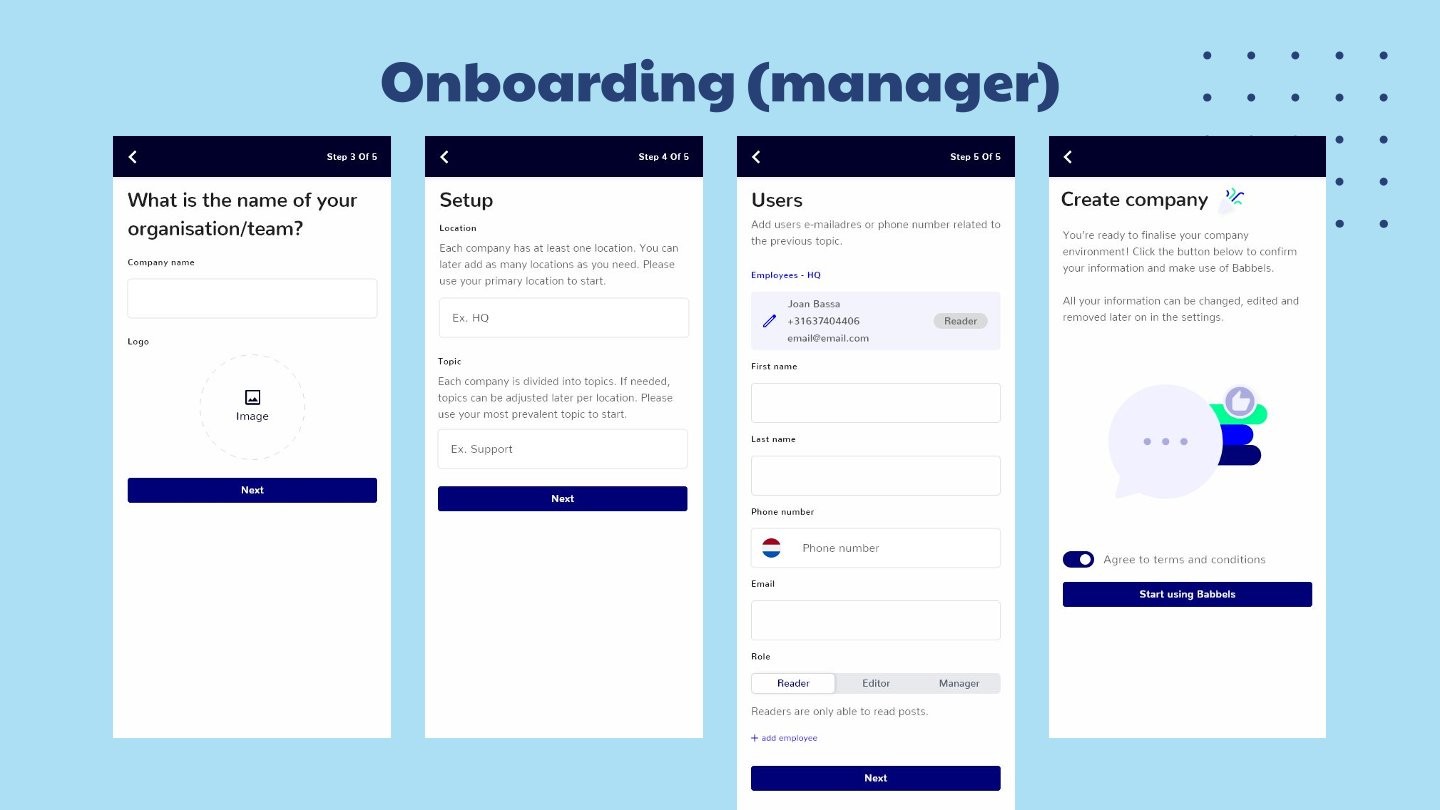
Onboarding by role
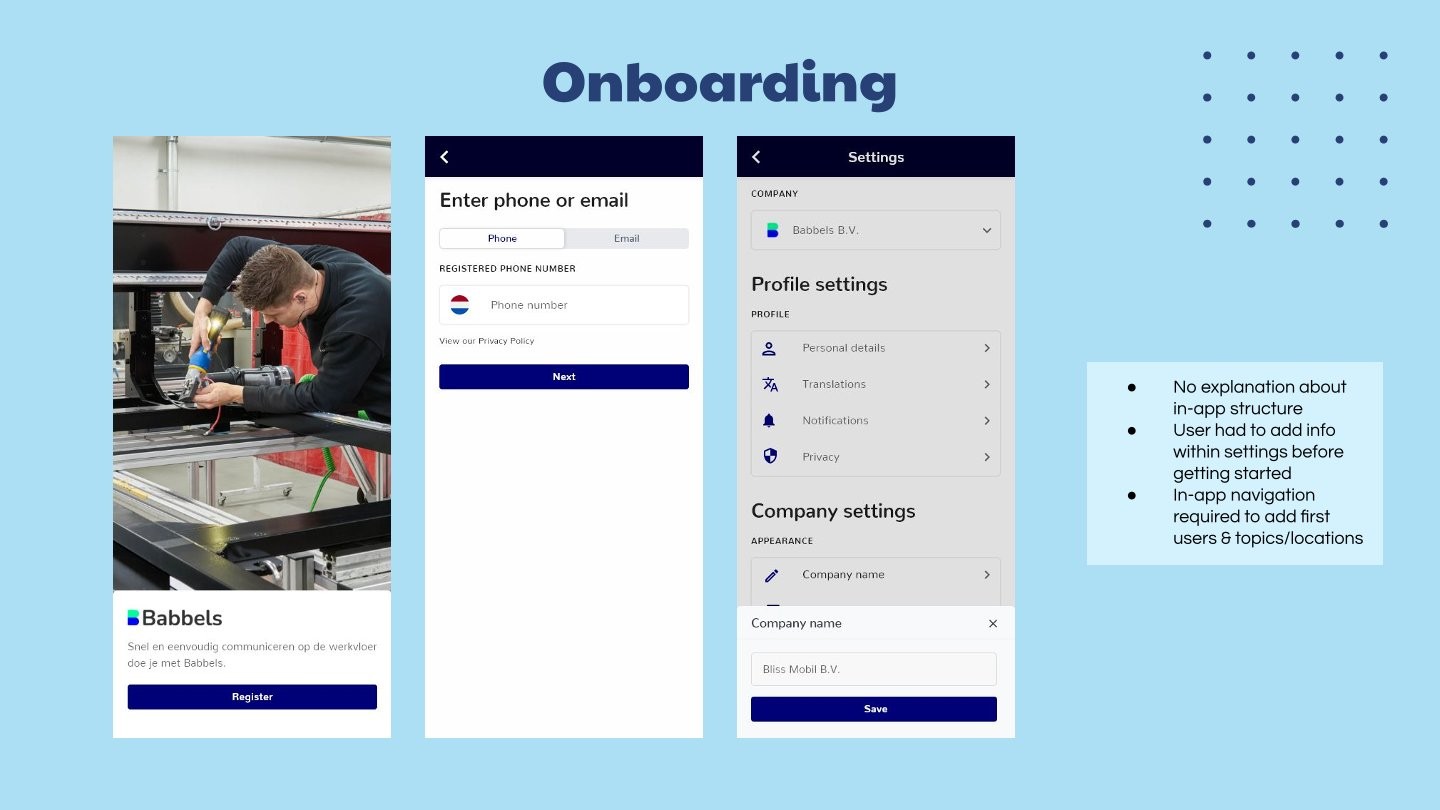
Early pilots revealed that onboarding was a major point of friction.
Originally, all users went through the same onboarding flow, even though managers and employees needed fundamentally different information and actions to get started. This caused confusion and slowed adoption.
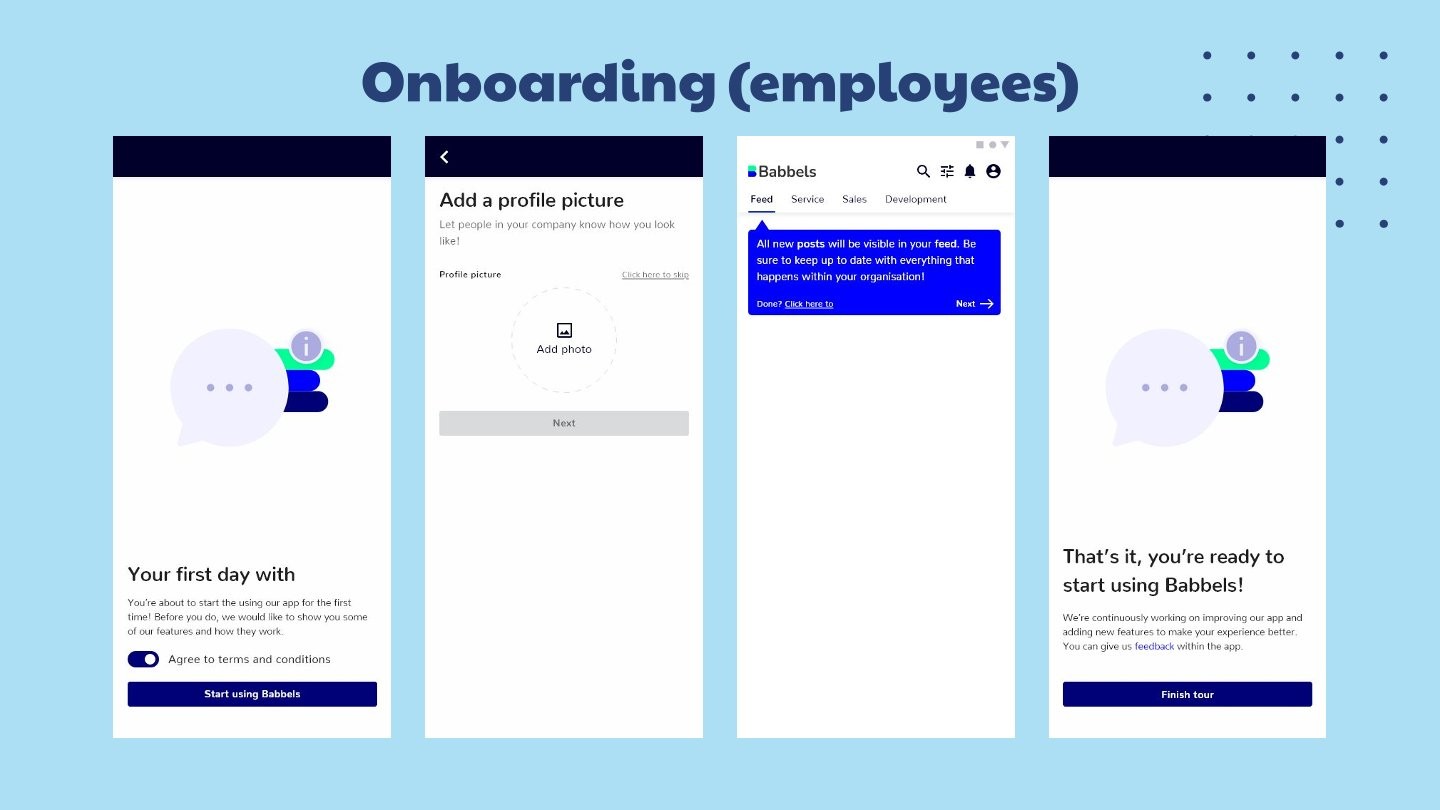
I redesigned onboarding to split immediately by role. Managers were guided through setting up structure, creating groups, and inviting users. Employees were onboarded into understanding how to consume information, manage notifications, and navigate content relevant to them.
This separation significantly reduced friction and made the first experience feel purposeful instead of overwhelming.
Core hierarchy and navigation
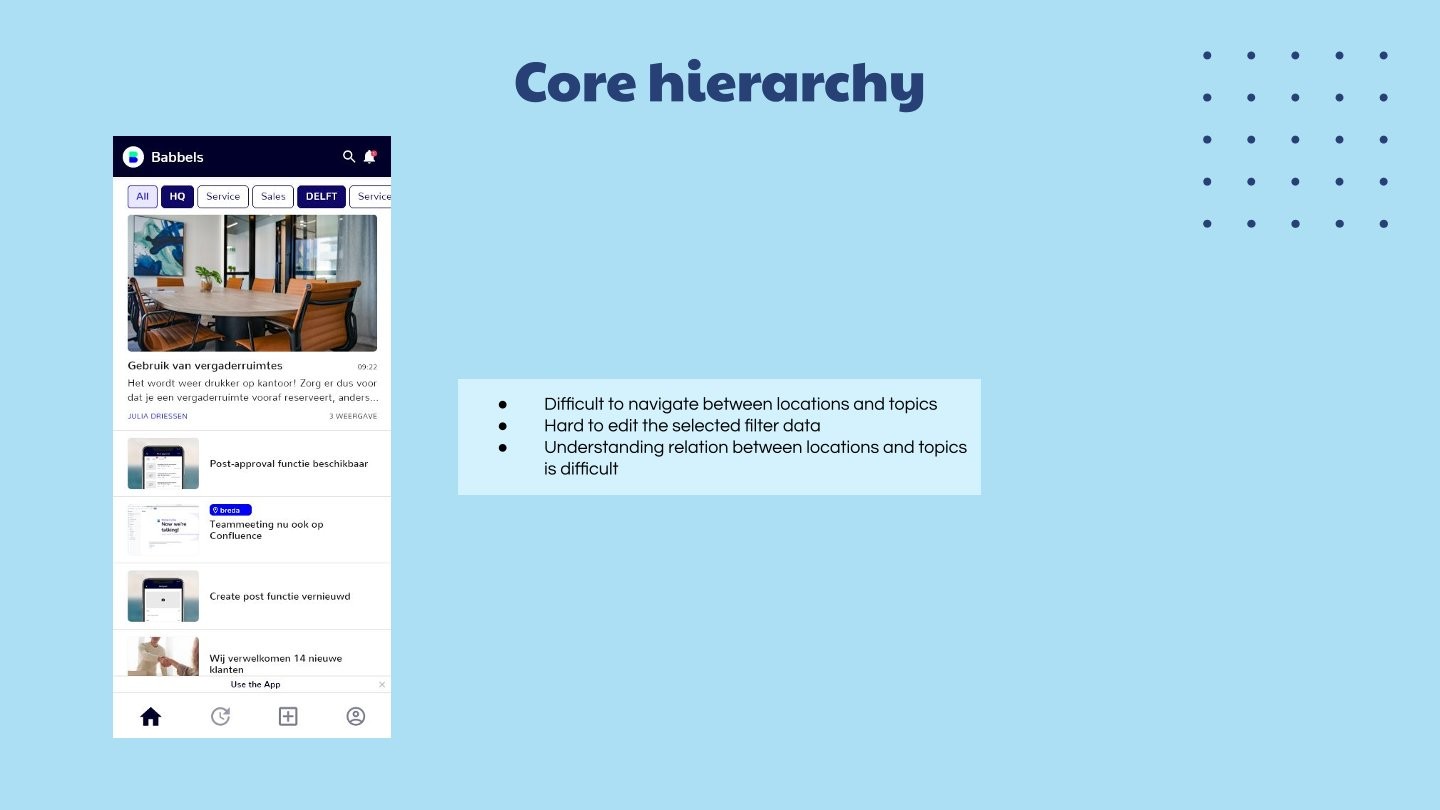
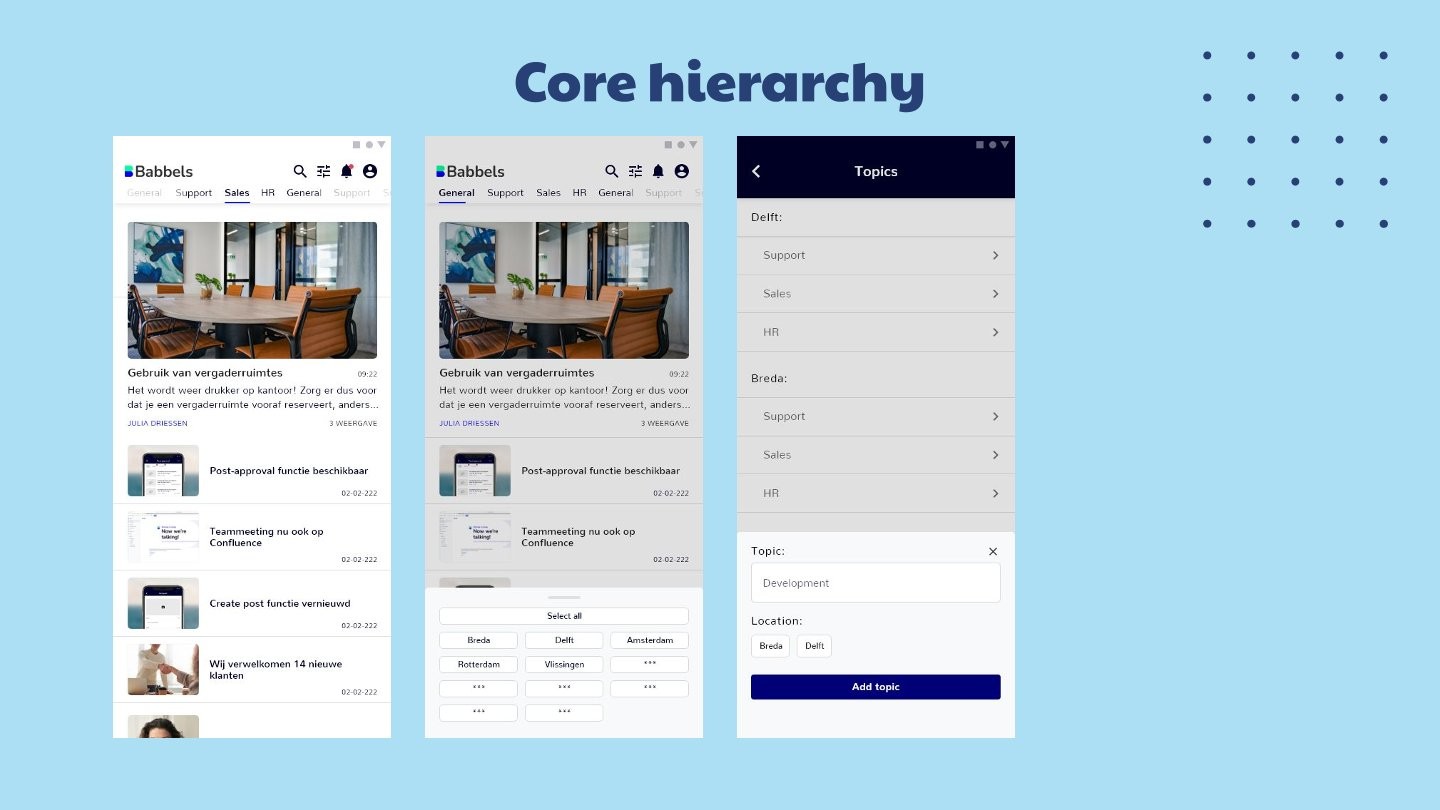
As organizations grew in complexity, navigating locations, groups, and topics became increasingly difficult.
Based on user feedback from pilots, I reworked the core hierarchy and navigation model. Relationships between locations and topics were clarified, filtering became more intuitive, and editing existing structures was simplified.
The result was a system that could support both small teams and large, multi-location organizations, without forcing users to understand the entire structure to do their daily work.
Design system and scalability
There was no design system when I joined.
I defined the visual language, components, spacing, typography, and interaction patterns from scratch, ensuring consistency across a rapidly growing product surface. This allowed us to move quickly without creating fragmentation, and made it possible to support white-label customization so organizations could adapt the product to their own brand identity.
The system was built to scale, both in terms of features and organizational complexity.
Conclusion
Outcome
By the time I departed ways with Babbels, the company evolved from an early concept into a flexible communication platform used in pilot environments with real organizational complexity.
The work established a clear design direction, reduced friction in critical workflows like onboarding and content creation, and proved that the product could support both simple and highly structured organizations. Most importantly, it demonstrated that complex internal communication does not have to feel complex to the people using it.