bol.
Not For Sale Manager (NFSM)
Context
As bol opened the platform to more international partners, the number of uploaded products increased rapidly. At the same time, we observed that a significant portion of partner assortment was offline and therefore not sellable.
This was not unexpected. bol’s data model allows partners to upload product information incrementally. Partners can add content, pricing, delivery details, certifications, legal documentation, etc. in separate steps at their own pace. This flexibility lowers the barrier to onboarding and assortment expansion, but it also introduces complexity.
Products can be offline for many reasons, including missing mandatory content, pricing issues, or failed legal checks. For partners managing large assortments, keeping track of these requirements proved difficult. In practice, many partners were unaware that a substantial part of their assortment was offline at all.
At the same time, offline assortment directly impacts other platform propositions. Products that are not for sale cannot participate in advertising, promotions, or campaigns, limiting both partner success and platform performance.
The problem
Through qualitative interviews and quantitative analysis, we identified three core issues.
First, there was no centralized visibility for partners. There was no single place where partners could clearly see which products were offline and why.
Second, even when partners encountered an offline product, the explanation was often too abstract or incomplete. Internally, we had detailed knowledge about the exact cause and resolution, spread across multiple systems. Externally, partners often saw generic messages that did not help them move forward.
Third, internally, responsibility for offline reasons was fragmented. Hundreds of different “not for sale” reasons existed across many systems, owned by different teams, each with their own logic and constraints. Updating explanations or calls to action required coordination across many different teams, which slowed down improvements and reduced consistency.
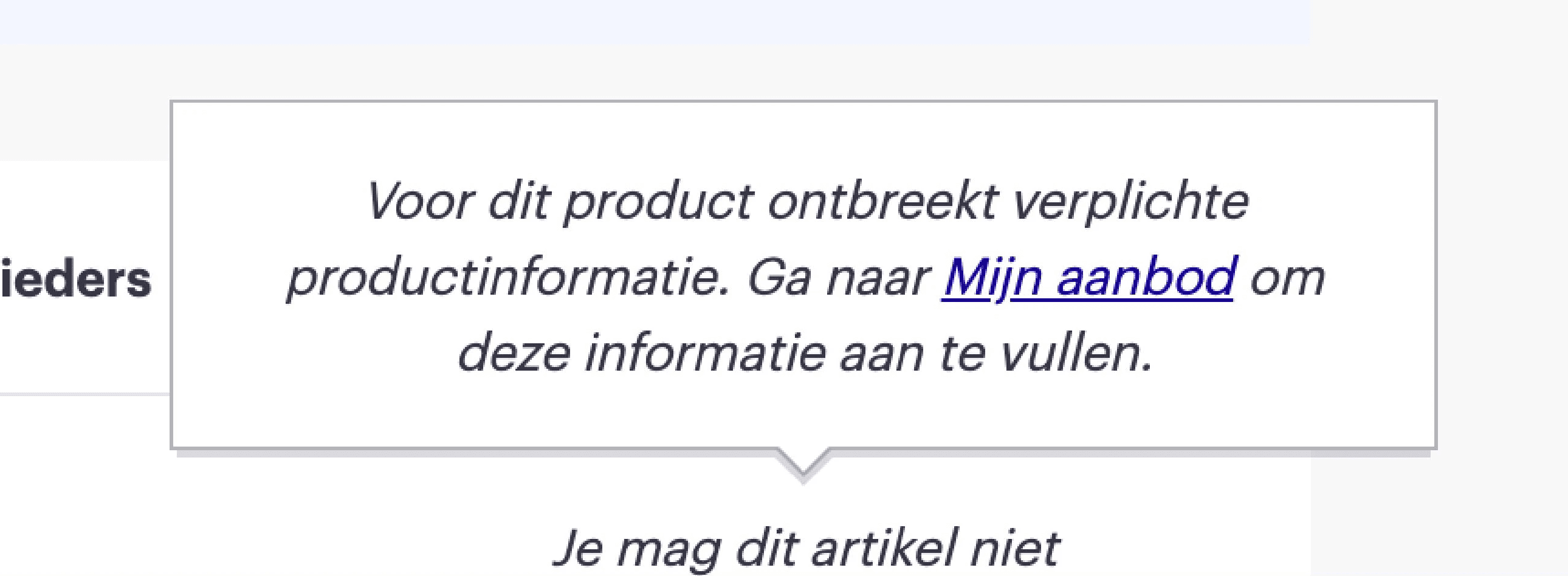
ℹ️ For example, we would communicate to the partner "For this product essential product information is missing. Go to ‘Mijn aanbod’ to enrich this product."
However, there was never any product information missing, instead, the reason would be "The product is offline because it possibly contains the ingredient titanum dioxide, which is prohibited by law."
Only by calling our partner service, they would be able to find the solution to resolve the probblem: "If the ingredient is removed from the product, the partner can send us an updated picture of the ingredient list which should show that the ingredient is not mentioned."
Strategic approach
We decided to address this as a platform problem, not as a series of UI fixes.
The core decision was to create a single, centralized source of truth for all offline reasons across bol. This system became the Not For Sale Manager.
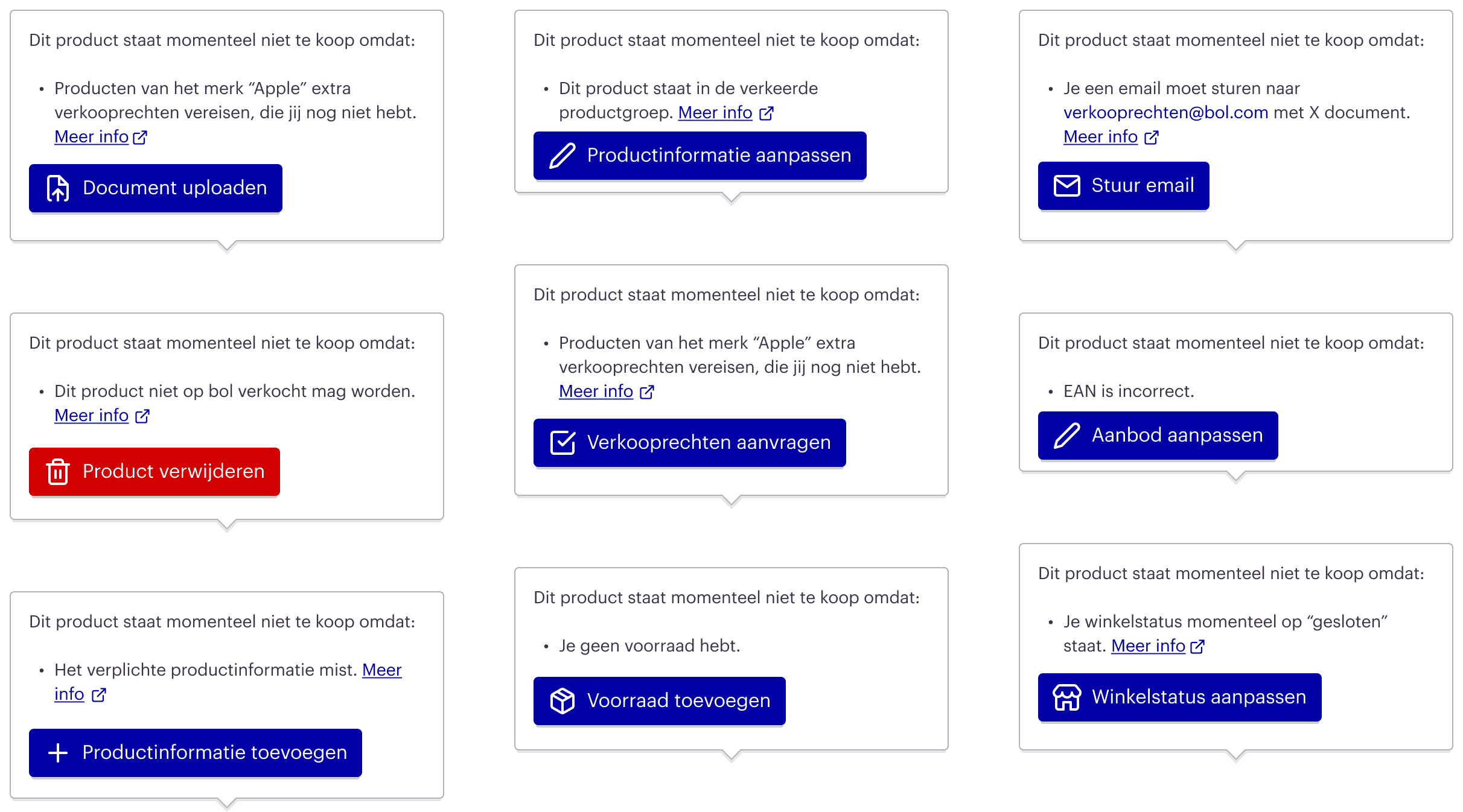
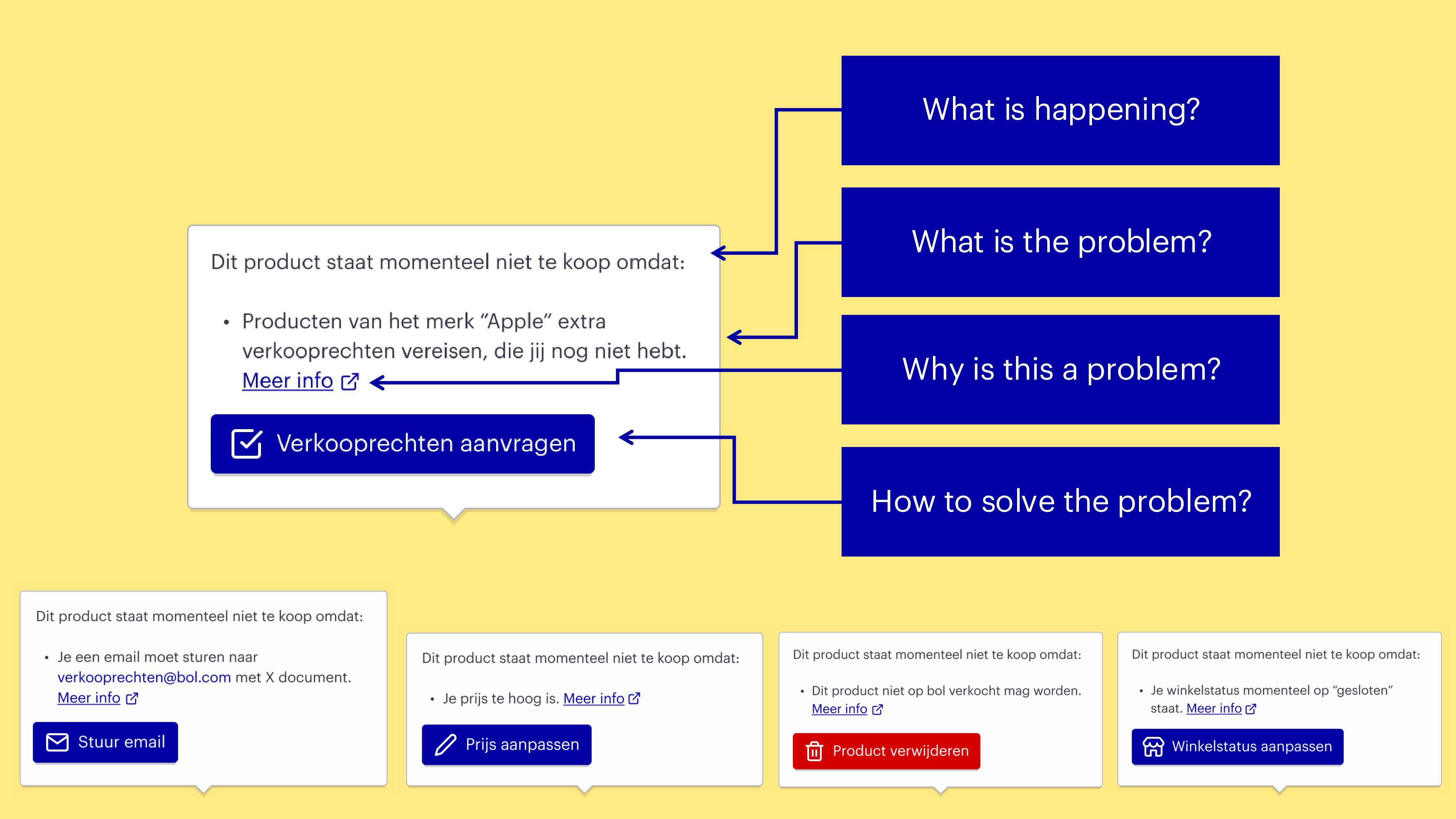
The NFSM aggregates offline reasons from all internal services and systems and translates them into:
A clear explanation of why a product is offline
A concrete, actionable next step for the partner
Consistent ownership per reason, aligned with the responsible team
Crucially, teams could manage their own reasons independently. If a new legislative requirement was introduced, the responsible team could add or update the explanation, select an appropriate call to action, and link to the correct destination without relying on product teams to implement changes.
This improved speed, ownership, and long-term maintainability across the organization.
Partner-facing experience
With the NFSM as the backbone, we redesigned how offline assortment is communicated throughout the partner journey.
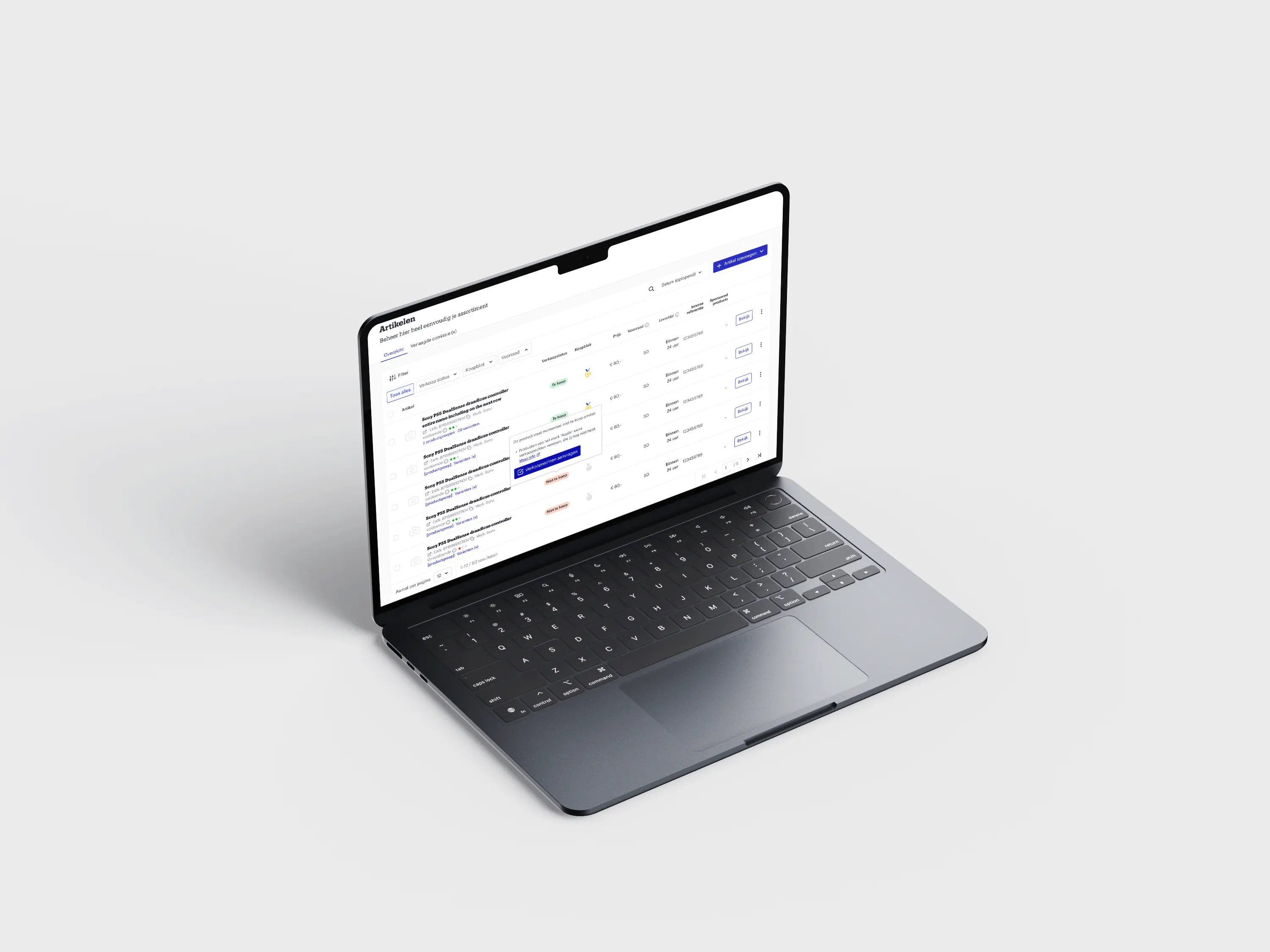
In the Assortment Overview, we introduced clear online and offline statuses per product. This was the first time many partners became aware of how much of their assortment was unavailable.
For each offline product, partners can now see one or multiple specific reasons, each with a clear next step. We carefully decided what information to surface directly in the Seller Dashboard and what to explain in more depth on the Partner Platform, to balance clarity without overwhelming users.
On the Seller Dashboard home, we introduced a visual overview of offline assortment using a donut chart. This was intentionally placed on the most visited entry point, reinforcing that managing offline products is an ongoing, daily task for many partners. We validated the effectiveness of this component through A/B testing and iterated on visual emphasis after confirming its positive impact on reducing offline offers.
In addition, we implemented trigger-based email communication. Partners receive notifications when specific groups of offline reasons exceed a defined threshold. These thresholds were tailored per partner segment to avoid noise. For example, national partners more often struggle with pricing benchmarks, while international partners more frequently encounter missing mandatory content due to language or regulatory differences.
To further reduce friction, we added enforced and personalized filters in the Assortment Overview. Partners can directly focus on specific offline reason groups, such as missing legal documentation or pricing issues, instead of working through a generic product list.
Making internal complexity usable
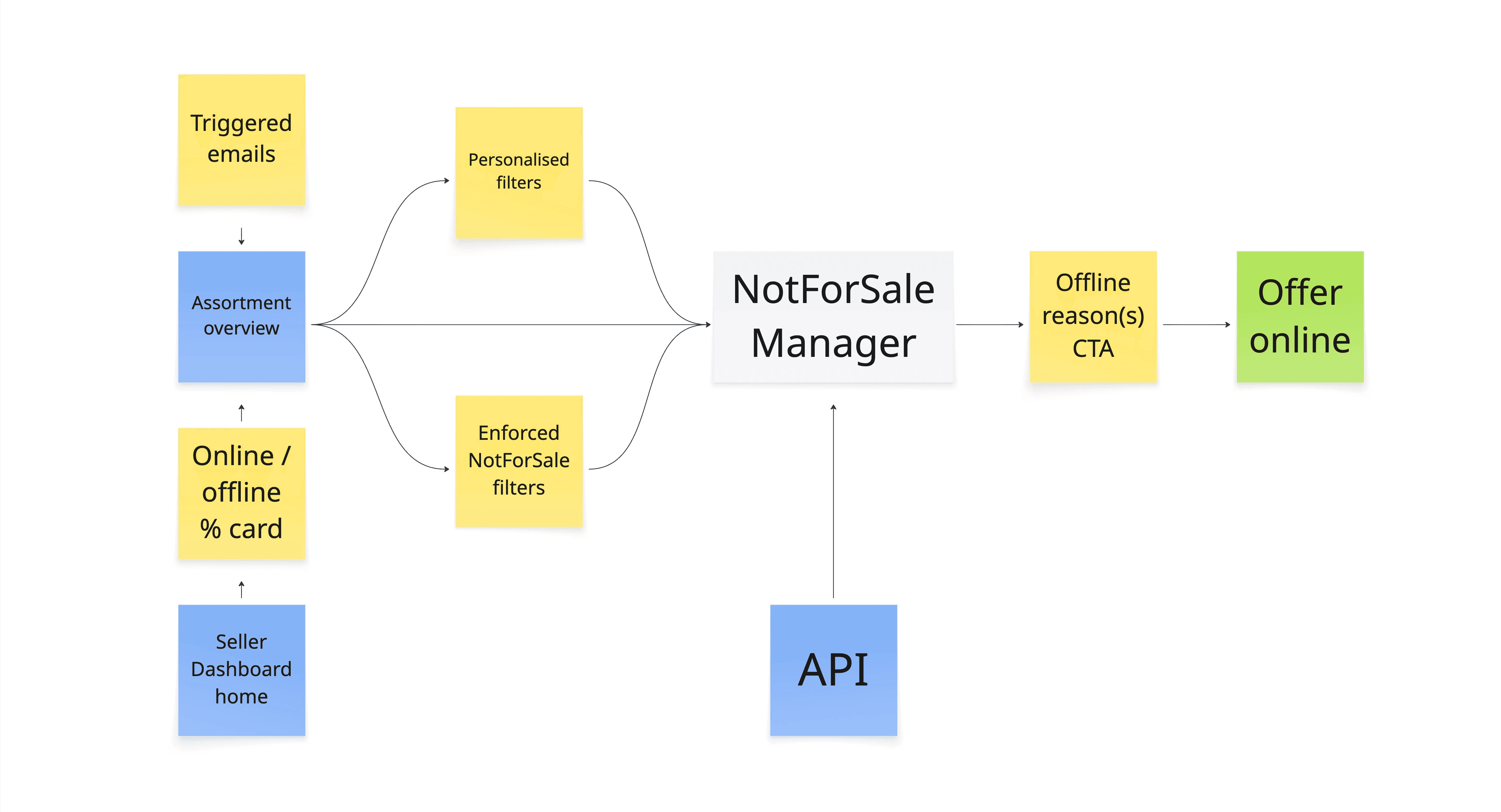
One of the most impactful aspects of the NFSM is that it exposes the full internal reasoning chain to partners in a usable way.
Previously, a partner might see a generic message stating that essential product information was missing, even though from their perspective everything appeared complete. Internally, we could see that the issue was related to a prohibited ingredient and knew exactly what evidence was needed to resolve it.
With the NFSM, partners now see:
The concrete reason a product is offline
The underlying issue in understandable terms
The specific action required to resolve it
This shift significantly reduced confusion, repeated support contacts, and unnecessary back-and-forth with partner service.
Outcome
More than half of all uploaded products on bol are offline at any given time, making this one of the most impactful problem areas on the platform.
After introducing the NFSM and its connected initiatives:
Partners gained clear, centralized visibility into offline assortment
A large portion of issues could be resolved independently without contacting support
The number of partner service cases related to offline offers decreased
Internal teams gained clearer ownership and faster iteration capability
Most importantly, offline assortment management shifted from a reactive, opaque problem to a structured and actionable workflow that partners actively engage with.