bol.
AI Uploader
Context
Content-related issues are one of the most frequent reasons products are not online on bol. This is especially pronounced for international partners, where roughly half of all offline products are caused by missing mandatory content.
This is not due to a lack of willingness. bol requires more detailed product information than many other marketplaces, because richer content directly improves findability and conversion. Both bol and partners understand the value of good content, but the effort required to provide it correctly is high.
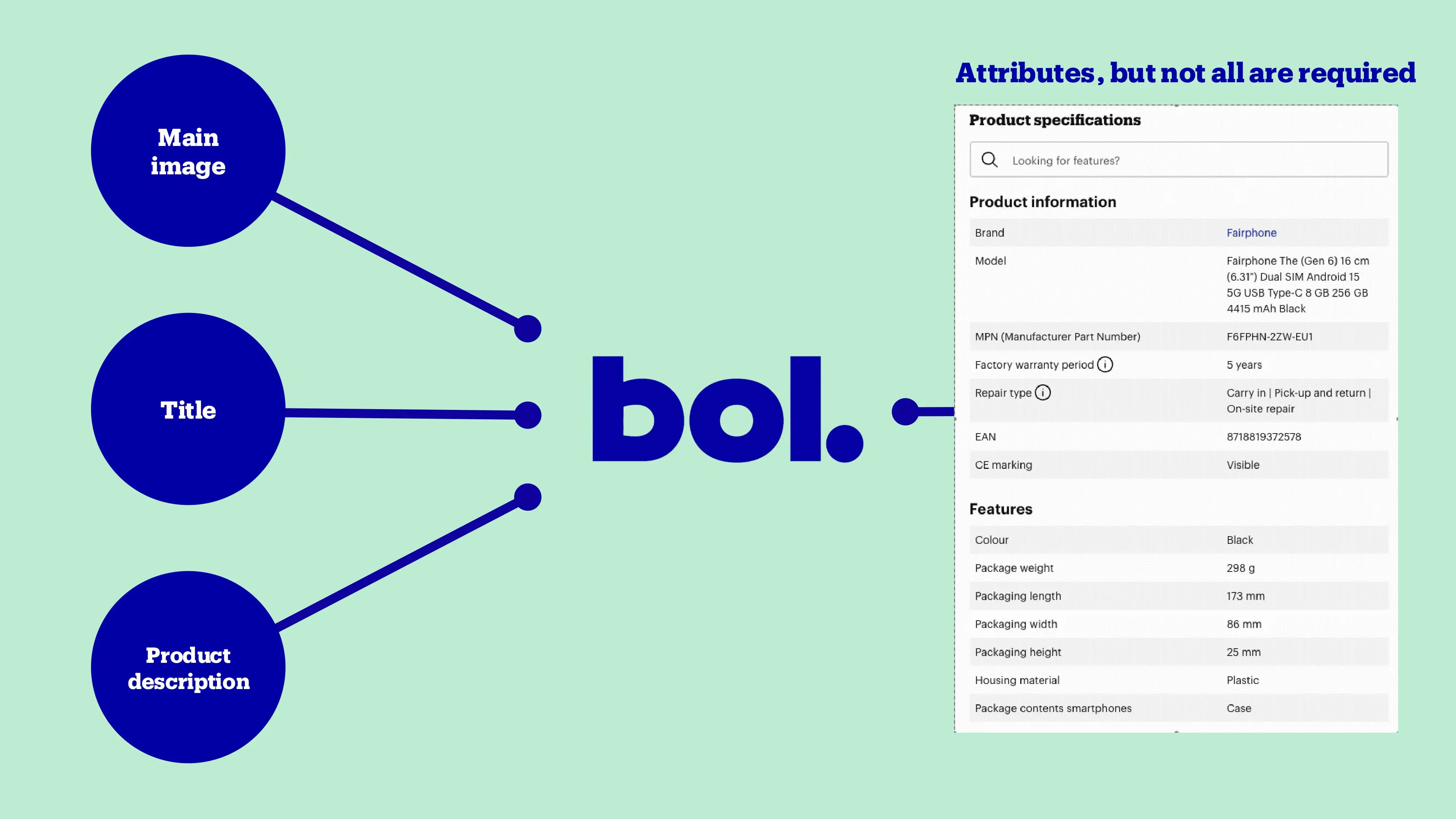
At a minimum, products must include a main image, a title, a description, and a set of mandatory attributes that differ per product group. In practice, content uploads fail not because information is missing, but because it does not align precisely with bol’s data model.
The problem
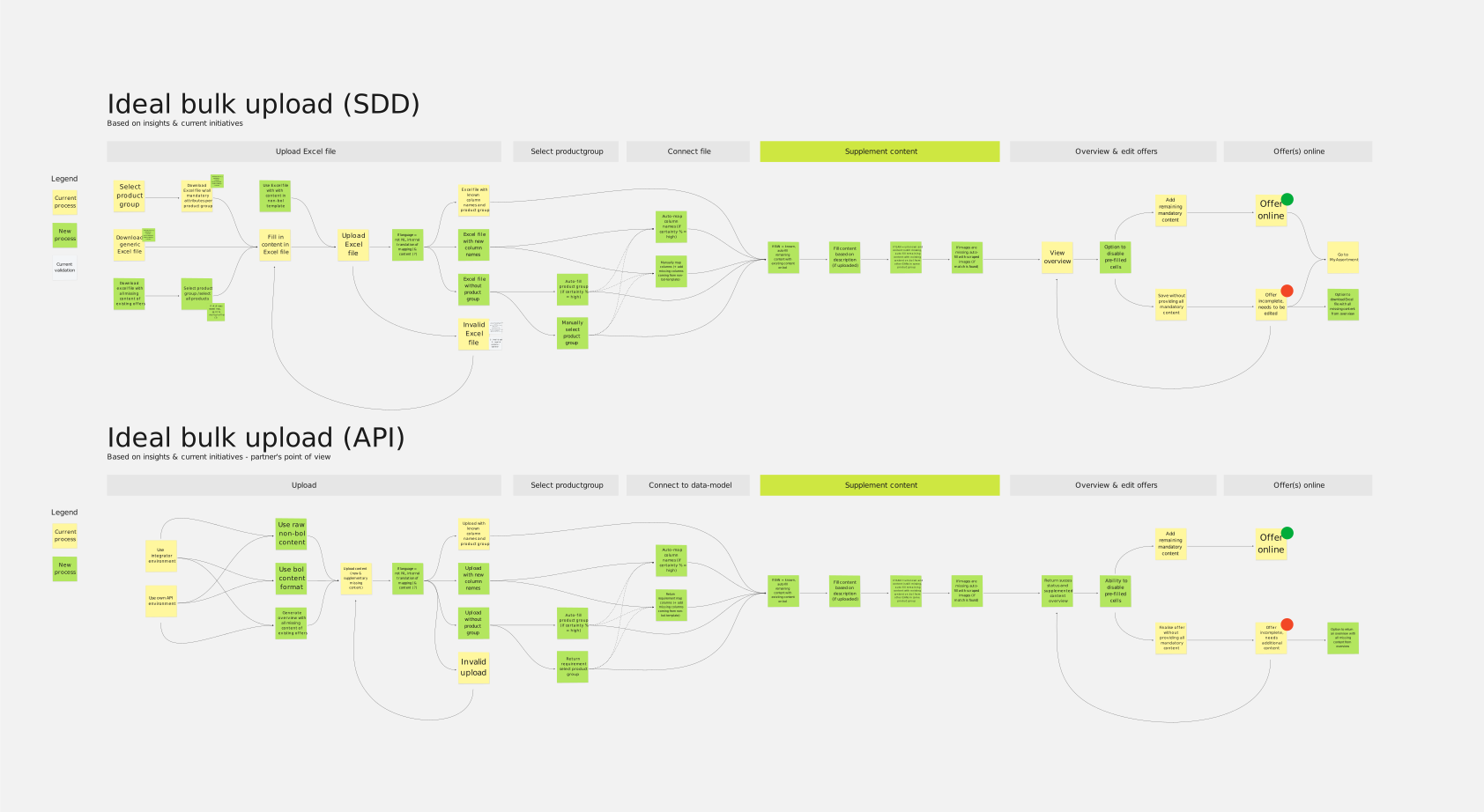
Through interviews with partners and integrators, and analysis across all upload flows (single product, bulk upload, and API), we identified several recurring friction points.
Selecting the correct product category is difficult. The category structure is extensive and differs from other platforms, making it hard for partners to map their internal data correctly.
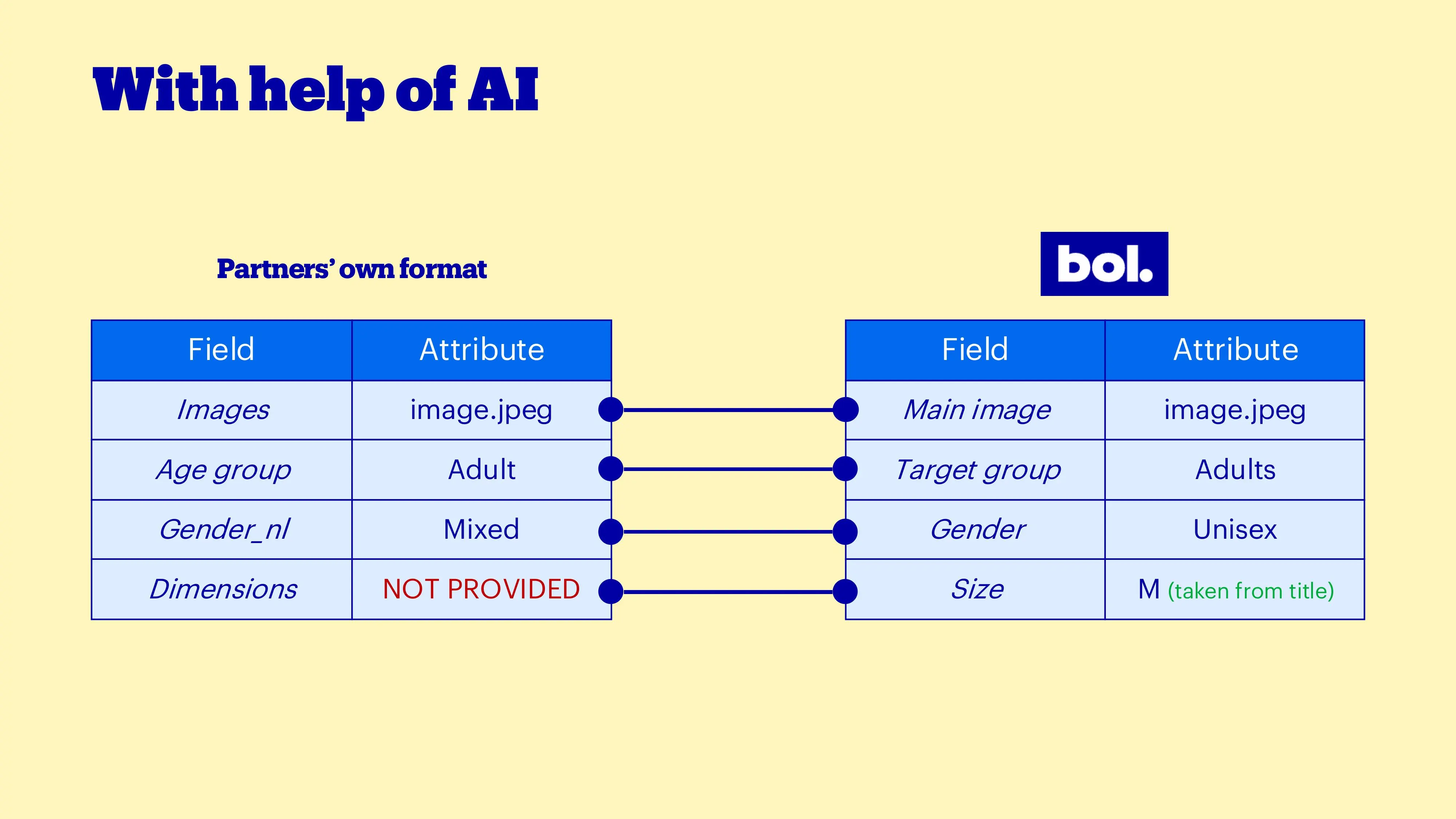
Attributes often fail to link. Attribute names used by partners do not always match bol’s definitions. Even when the meaning is correct, mismatches prevent successful mapping.
Attribute values must be exact. If a partner provides a value such as “adult” instead of the predefined option “adults”, the attribute is rejected and the entire product can remain offline.
The result is a low upload success rate and limited assortment coverage, even when partners have the necessary information available.
Strategic approach
Instead of asking partners to adapt perfectly to bol’s data model upfront, we explored how we could adapt the system to partner input.
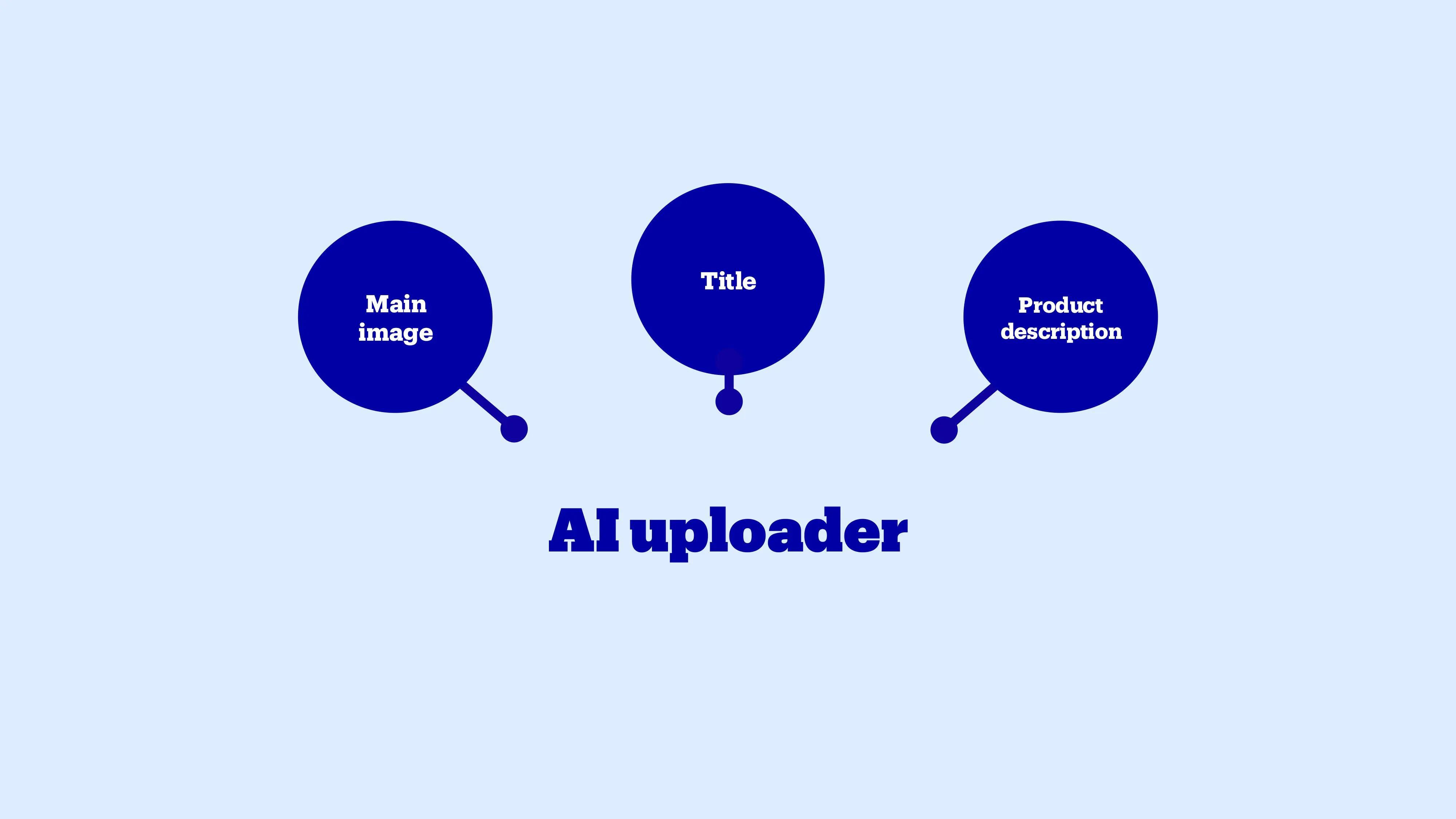
The idea behind the AI Uploader was simple but powerful. What if we only require the bare minimum at the start, a main image, a title, and a product description, and let the system do the heavy lifting?
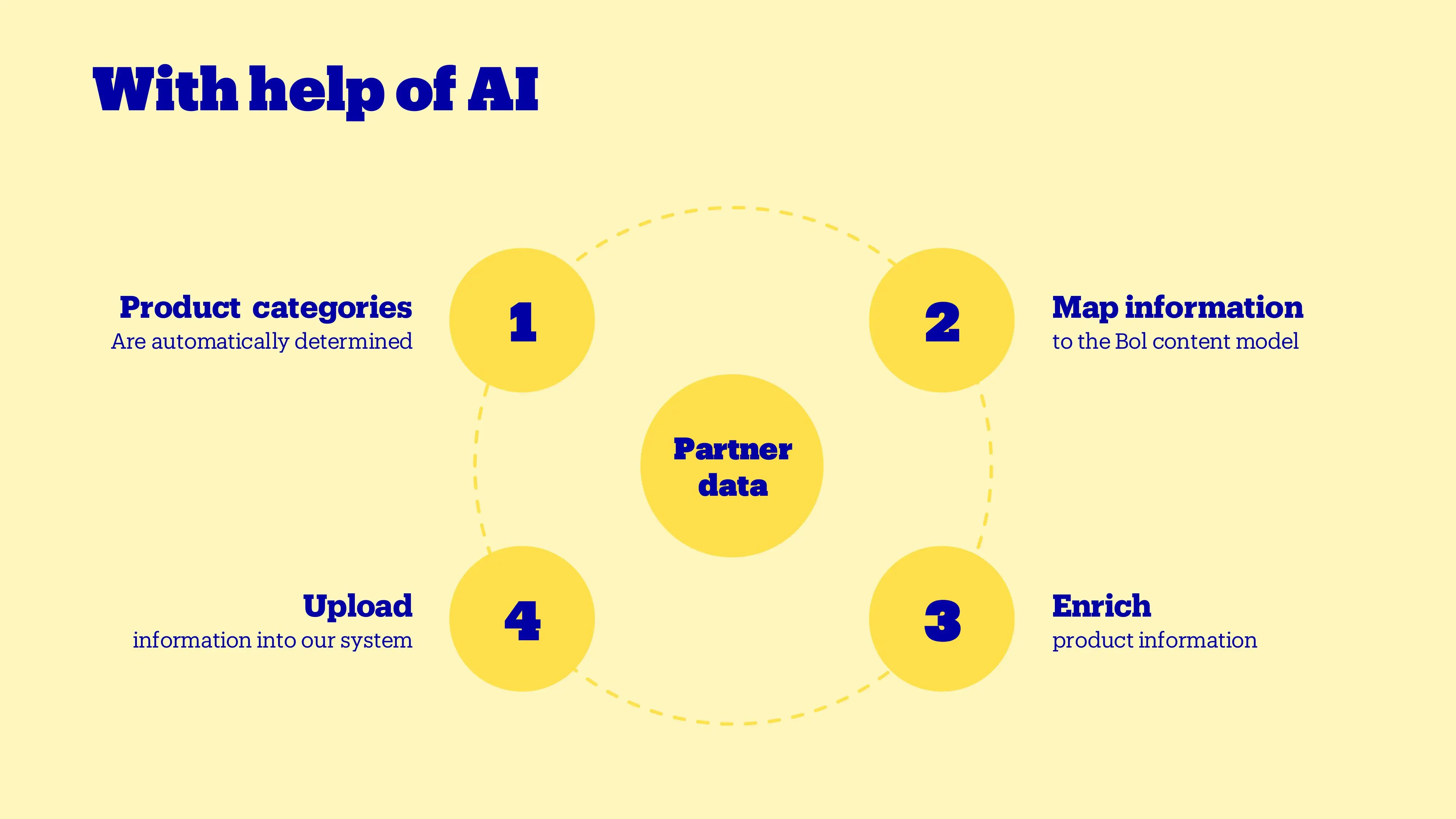
The AI Uploader uses this input to automatically:
Determine the correct product category
Map partner-provided information to bol’s content model
Recognize attribute meanings in context, even if naming differs
Enrich missing information where possible
Convert partner data into valid bol attribute values
If partners provide additional attributes themselves, these are mapped automatically as well. The system translates partner content into the bol format, instead of rejecting it for not being an exact match.
Partner-facing experience
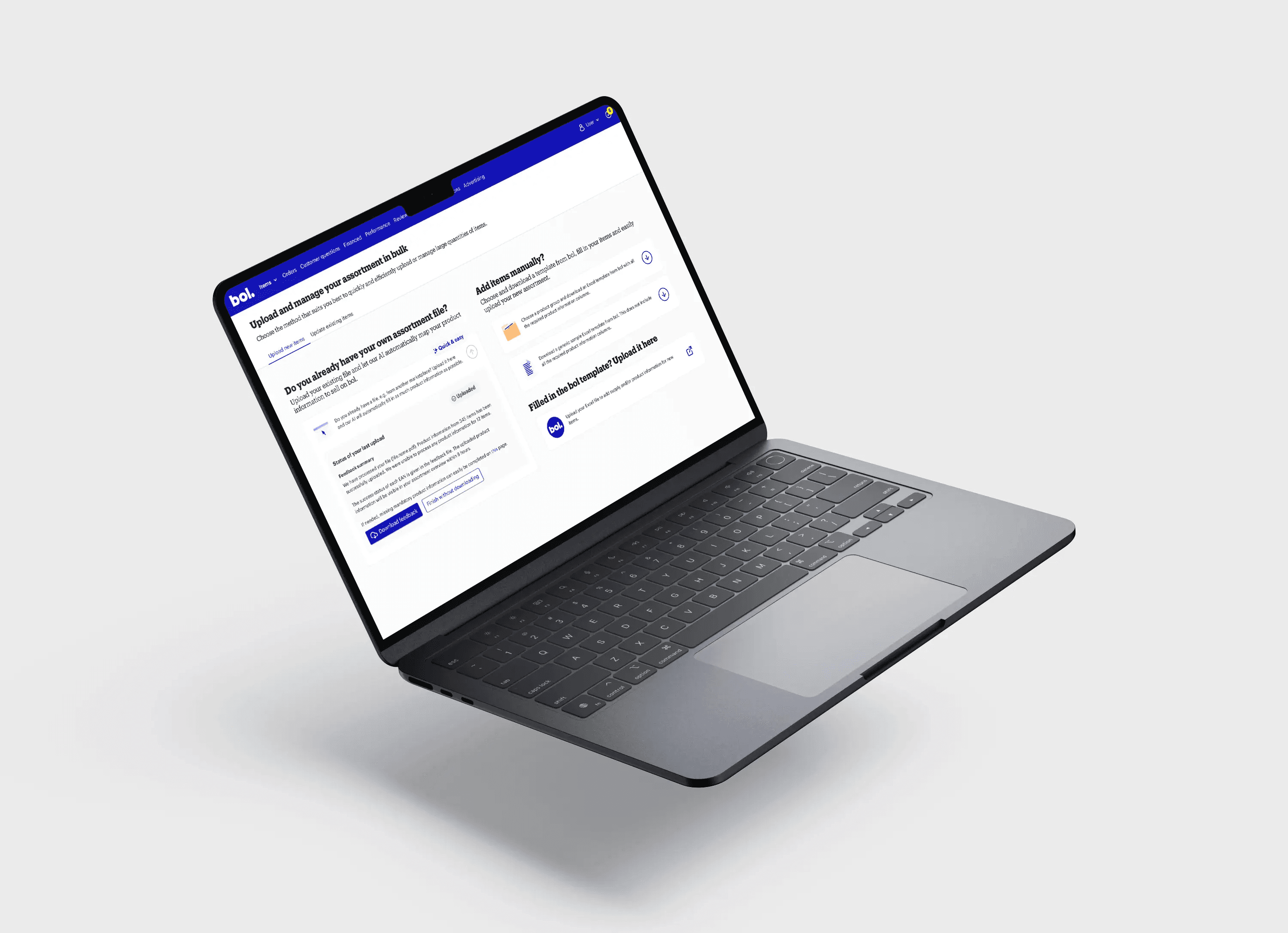
From the partner perspective, the workflow is intentionally lightweight. Uploading content becomes a single action instead of a multi-step, error-prone process.
Partners upload their file with basic product information. The AI Uploader processes the data, enriches it, and submits it into bol’s systems with a much higher chance of success on the first attempt.
This fundamentally changes the nature of content work. Instead of manually filling, rewriting, and mapping content across hundreds or thousands of products, partners can focus on reviewing and refining only the small portion that could not be enriched automatically.

Impact
Products uploaded through the AI Uploader achieve an average content fill rate of approximately 75 percent.
Around 28 percent of uploaded products require no additional manual work at all. These products go live immediately with all mandatory information completed by the system.
For partners managing large assortments, this removes one of the most time-consuming tasks in their daily operations. Uploading content, historically a manual and repetitive process, is reduced to a single upload and minimal follow-up.
Given that bol processes tens of thousands of products every day, even small improvements in upload success rate and time-to-live translate into significant platform-level impact.
Outcome
The AI Uploader is not about replacing partner input, but about removing unnecessary friction between partner data and bol’s internal models.
By shifting complexity from the partner to the system, we significantly increased first-time upload success, reduced manual effort, and improved assortment availability. At the same time, this work directly supports other initiatives such as Not For Sale Manager, by reducing one of the largest sources of offline products at the root.